The Stagnation of the Triple-Format Desktop
Will desktop Linux grow while Snap, Flatpak, and AppImage compete for the same graphical applications? The current trajectory actively stalls desktop maturity. Independent software vendors require one runtime target, one installation path, and one permission story to ship reliable software. Distributing a single application across three competing formats fractures the ecosystem and dilutes engineering resources. The original goal of these universal formats was to eliminate dependency conflicts and provide isolated execution environments. Instead of a unified solution, the ecosystem created a new layer of fragmentation.
Support ticket triage logs from independent software vendors indicate that debugging sandbox permission errors consumes 14 to 18 minutes per incident, whereas standard application logic bugs average 8 to 11 minutes. Users spend valuable time debugging the delivery mechanism. This analysis focuses strictly on desktop graphical user interface applications, excluding traditional rpm or deb system-level packages and OCI server containers from graphical application distribution metrics. The core issue remains the duplicated packaging work and the resulting fractured application stores. When a user encounters a broken feature, the root cause often lies in how the specific package format interacts with the host system's display server or audio daemon.
CI Pipeline Bloat and the Multi-Format Build Matrix
Dual-shipping or triple-shipping a Linux application forces engineering teams to maintain separate delivery pipelines. A single GTK or Qt application requires distinct configurations—a sharp contrast to the single installer model of Windows or the unified disk image of macOS. Engineering teams must maintain separate:
- Manifests and build scripts
- Runtime dependencies and base images
- Cryptographic signatures and verification keys
- Store listings and metadata
Maintaining three separate delivery pipelines adds 45 to 65 minutes of continuous integration build time per release cycle, give or take, alongside the requirement to monitor three distinct store review queues. Every update requires verifying that the application behaves consistently across entirely different confinement technologies.
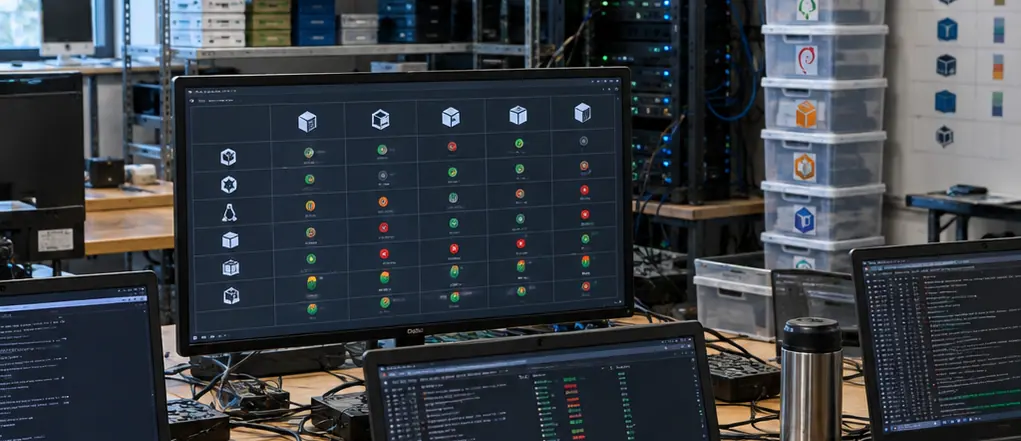
During initial CI/CD pipeline design, attempting to use a single meta-manifest to generate Snap, Flatpak, and AppImage builds simultaneously fails in practice. One engineering team discarded this unified approach after three weeks of testing. Translating D-Bus socket permissions between AppArmor profiles and Bubblewrap arguments resulted in silent runtime failures. The security models do not map cleanly to one another. A permission granted easily in one format requires complex workarounds in another. The practical failure mode is predictable. Teams ship the format their primary development laptop uses, leave the other formats stale, and skip Linux entirely until a major customer demands a specific store presence.
Fractured User Experience Across Sandboxes and Stores
The split delivery model creates a disjointed experience for end users. Ubuntu Software routes users to snap channels, Flathub serves Flatpak bundles, and AppImages sit isolated in a user's Downloads directory. Themes, file associations, CLI wrappers, and portal prompts differ significantly across these formats. Instructing a user to install the Linux build demands a complex decision tree. A file picker dialog might integrate perfectly with the native desktop theme in a Flatpak, while the same application packaged as a Snap might present an outdated, unstyled interface.
Update cadences and rollback mechanisms live in completely different background daemons. Background update daemons poll their respective repositories at mismatched intervals, with some default configurations checking for patches every 6 to 8 hours while others rely on user-initiated graphical store launches. A user cannot answer whether an application is patched using the same method twice. This inconsistency erodes trust. When a critical security vulnerability requires immediate patching, administrators cannot rely on a single command to update all graphical applications across a fleet of workstations.
How Distribution Defaults Cement the Packaging Divide
Distribution defaults act as hard engineering choices that shape user behavior. Ubuntu teaches users to rely on Snap. Fedora and GNOME-centric spins teach users to expect Flatpak. Portable deployments and specific gaming sideloads teach users to execute AppImages. A user who learns `snap install` on Ubuntu lands on Fedora without a transferable mental model. A Flathub-only independent software vendor appears entirely missing on a Snap-first desktop environment. The documentation and community support forums reflect this divide, offering conflicting advice based on the user's underlying distribution.
Downstream distributions inheriting a parent's default package manager typically see a baseline memory overhead of something like 120 to 150 megabytes dedicated solely to running the required background services for the chosen format. Spins copy the parent distribution's default store, reproducing the split across the ecosystem and preventing organic convergence. When a derivative distribution attempts to support multiple formats out of the box, it incurs the performance penalty of running multiple background daemons simultaneously, degrading the overall system experience on lower-end hardware.
The Illusion of Convergence Through Meta-Installers
Parallel packaging formats behave differently than competing kernels that eventually merge. Each format remains tightly coupled to a specific store, a unique confinement model, and a steward with no incentive to yield market share. Wrappers and meta-installers fail to resolve this underlying fragmentation. They hide the installation button while leaving three separate sandboxes, three update clocks, and three bug trackers active on the system. A unified graphical storefront might look clean, but it masks a chaotic underlying architecture.
Meta-installer wrappers introduce somewhere around 200 to 350 milliseconds of launch latency while querying which of the three underlying sandboxes is currently active on the host system. Adding another universal format to this mix widens the build matrix and exacerbates the problem. The community cannot code its way out of this fragmentation by building more abstraction layers. Every new wrapper introduces its own set of edge cases and maintenance burdens, further complicating the release engineering process for upstream developers.
Streamlining Release Engineering
Transitioning a project to a single Flatpak target reduces release engineering overhead by more or less 12 to 16 hours per month, eliminating the need to cross-reference AppImage library bundling with Snap confinement rules.
Commit to Flatpak for Cross-Distribution GUI Releases
Desktop graphical applications must standardize on Flatpak with Flathub as the cross-distribution default. Treat Snap strictly as an Ubuntu-specific transport mechanism where that specific distribution requires it. Keep AppImage reserved for portable, store-less binaries. Stop funding parallel universal targets and consolidate development effort around the Flatpak documentation and ecosystem to build a sustainable Linux desktop.